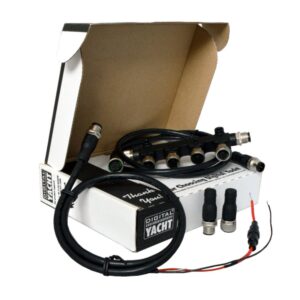
NAVLink Blue – Bluetooth sensors to NMEA 2000
Original price was: 300,00€.240,00€Current price is: 240,00€.
“Navlink Blue converts your Bluetooth sensors into fully integrated NMEA 2000 instruments, visible on your multifunction displays, without additional cabling and with instant commissioning.”
KEY FEATURES
Navlink Blue is an innovative gateway that allows Bluetooth sensors to connect directly to the boat’s NMEA 2000 network. With it, compatible Bluetooth sensors become true NMEA 2000 instruments, whose data can be displayed on compatible chartplotters and multifunction displays.
Navlink Blue ensures communication between Bluetooth sensors and the NMEA 2000 network. You can connect up to 16 sensors at the same time to Navlink Blue.
This makes it possible to easily integrate modern wireless sensors into an existing marine installation, without adding additional dedicated instruments.


USE CASES
Navlink Blue is continuously evolving to integrate new Bluetooth sensors and expand onboard instrumentation possibilities. The list of currently compatible BT sensors is available in the FAQ section. If you would like to integrate a specific sensor, feel free to contact us.
For developers, a Software Development Kit (SDK) is available on GitHub to access raw NMEA 2000 data and enable the development of third-party solutions.
Please Note: For charting apps such as Navionics, AquaMap, TZ iBoat etc, NMEA support is via NMEA to WiFi devices such as our NavLINK 2. BT is not supported.
Here are some examples of use cases:

Calypso: Wireless Wind Vane Anemometer

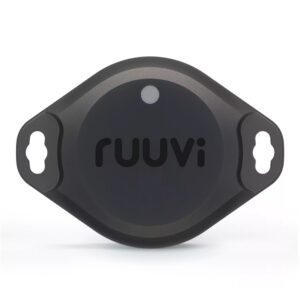
Ruuvi: Temperature, humidity and pressure sensor

Water Presence sensor

Mopeka: Bottle level sensor
OPERATION
The configuration of NavLink Blue is done through a simple and intuitive web interface, thanks to the simultaneous operation of Bluetooth and Wi-Fi.
This interface allows you to add new sensors and modify certain parameters of connected sensors.
The “Settings” page enables monitoring of NMEA 2000 network parameters, including connected devices, transmitted messages, and exchanged data.
The interface also allows you to perform NavLink Blue software updates.
SPECIFICATIONS

- Bluetooth to NMEA 2000 sensors
- Enables Bluetooth sensors to integrate with NMEA 2000 networks
- SDK available for developers looking to embed NMEA 2000 connectivity in their sensors or systems
- Self powered from NMEA 2000 network and includes connection cable
- Easy wireless setup using just a browser
- Supports multiple connections
| Dimensions | 105 × 72 × 32 mm |
|---|
The NavLink Blue uses Bluetooth Low Energy (BLE) instead of Wi-Fi. This offers:
- lower energy consumption
- a direct connection with Bluetooth sensors
- a new range of compatible devices.
This depends on which sensor you are connecting to, but in general NavLink Blue can connect up to 16 BT sensors simultaneously.
This allows you to create a complete onboard monitoring system, including temperature, wind, tank levels, and many other types of data.
Yes. NAVLink Blue complies with the NMEA 2000 standard and works with all N2K-certified equipment: wind sensors, speed or depth probes, GPS, environmental sensors, etc. It is also compatible with the Raymarine SeaTalkNG standard via an NMEA 2000 to SeaTalkNG connector adapter.
No. Simply connect the NAVLink Blue to the NMEA 2000 backbone.
Yes. It is immediately operational in Bluetooth mode and can send NMEA 2000 data to the NMEAremote iOS application without advanced configuration.
No. It is designed as an NMEA 2000 ↔ Bluetooth gateway (and Wi-Fi for configuration), but is not intended to replace a WiFi router.
Yes. The NAVLink Blue complies with the NMEA 2000 standard and works with all N2K-certified equipment: wind sensors, speed or depth probes, GPS, environmental sensors, etc. It is also compatible with the Raymarine SeaTalkNG standard via an NMEA 2000 to SeaTalkNG connector adapter.
The range varies depending on the environment. In general, it is 10 to 15 metres. However, please note that steel or carbon fibre hulls can significantly attenuate the signal and require more careful installation.
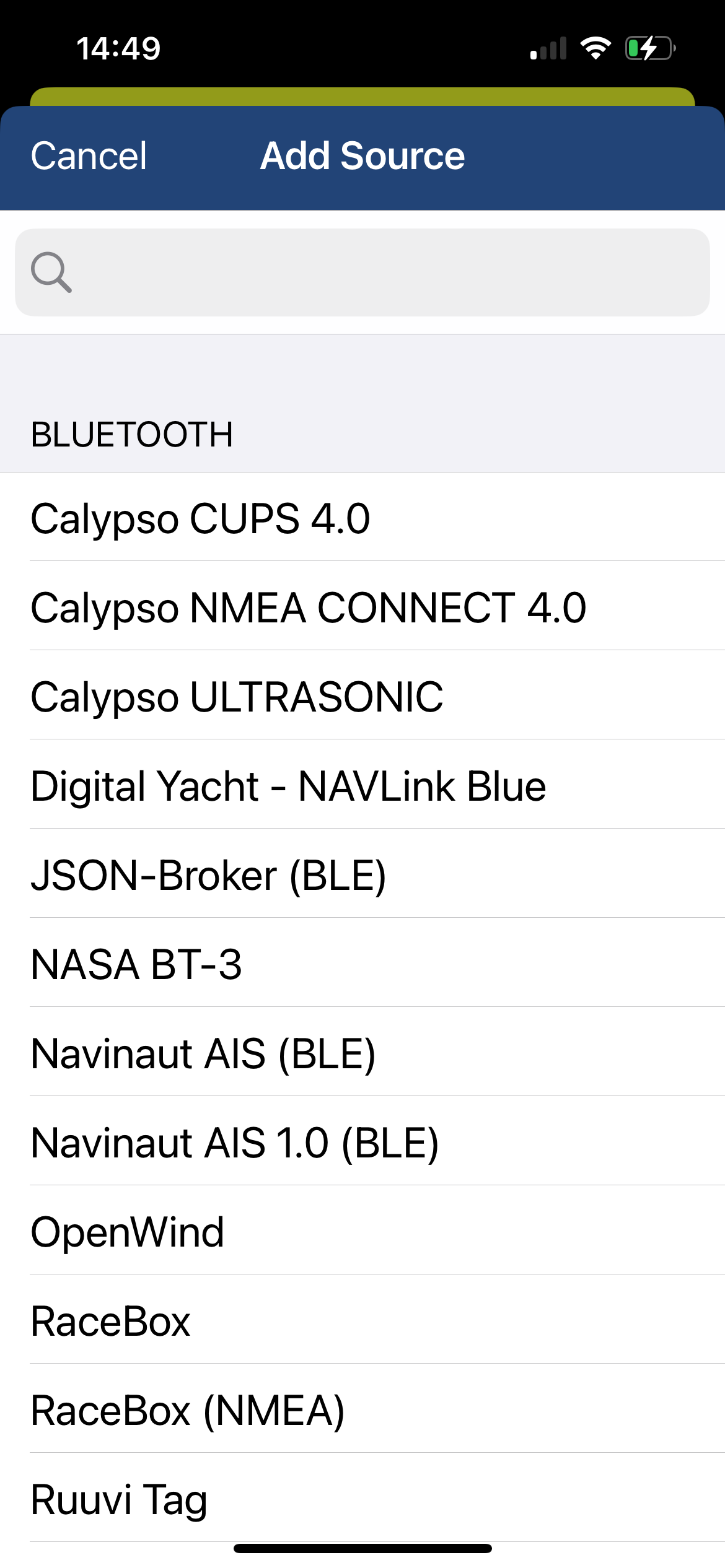
Ensure NAVLink Blue is in BT mode.
Then open NMEA Remote on your iPhone or iPad.
Tap Menu, then Settings (by clicking on “NMEA Remote” at the top of the menu).
Navigate to NMEA > Sources > Edit > Add Source.
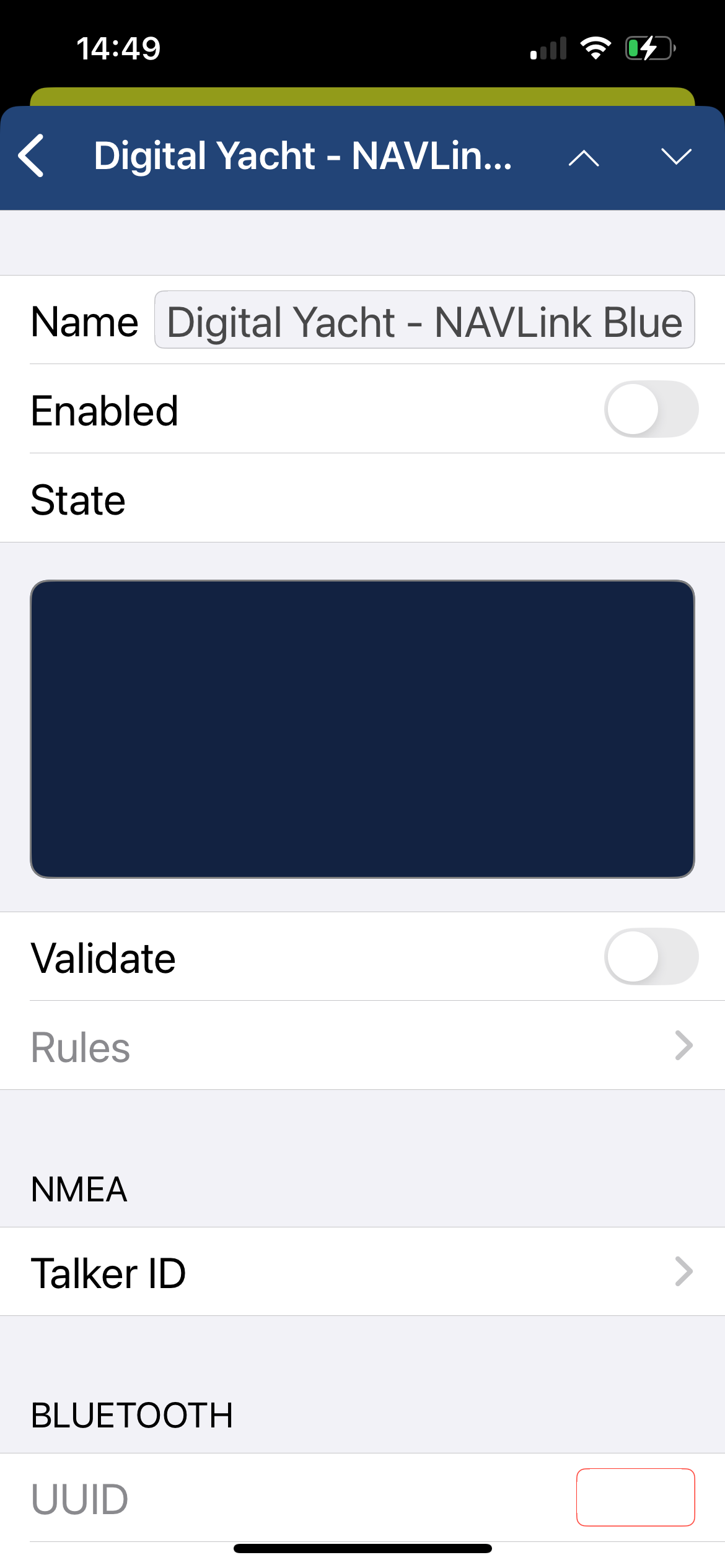
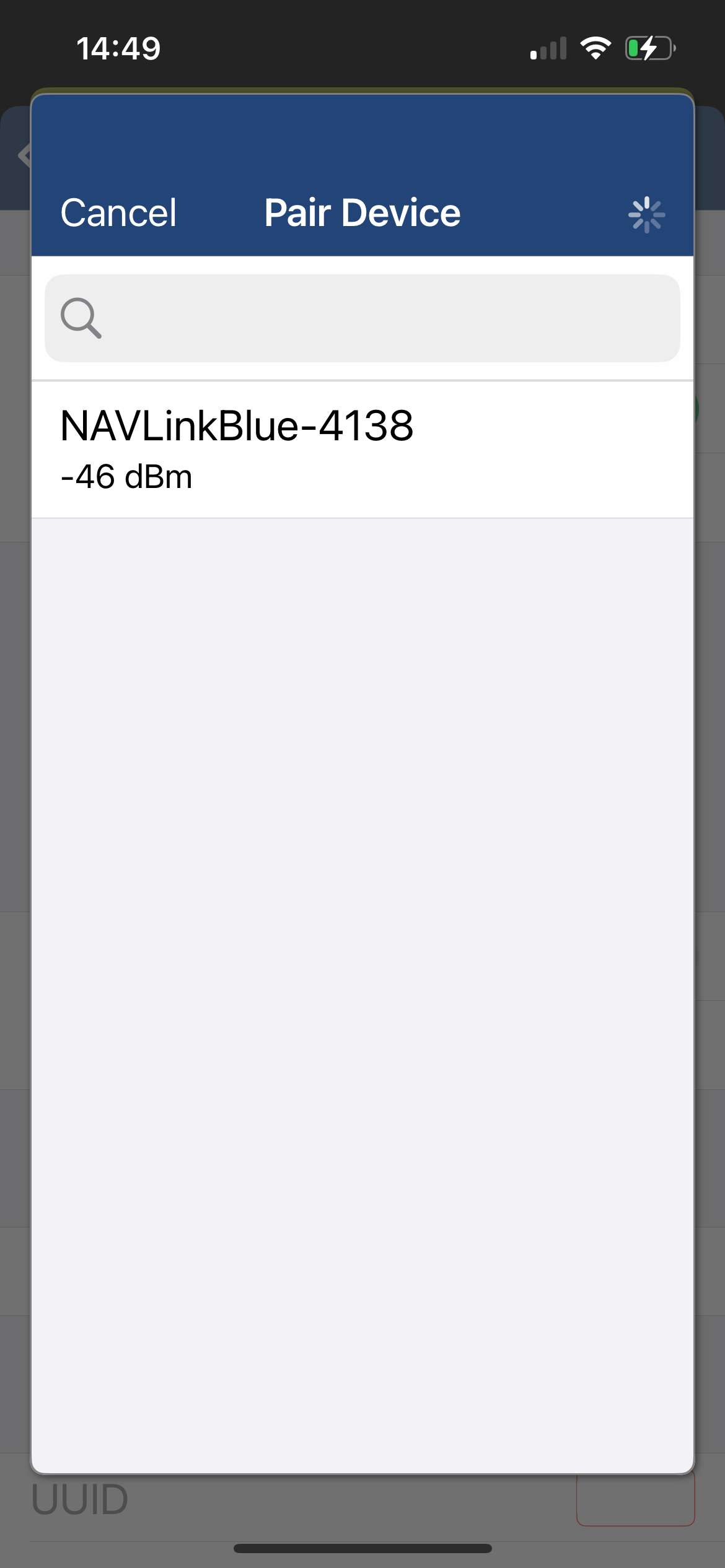
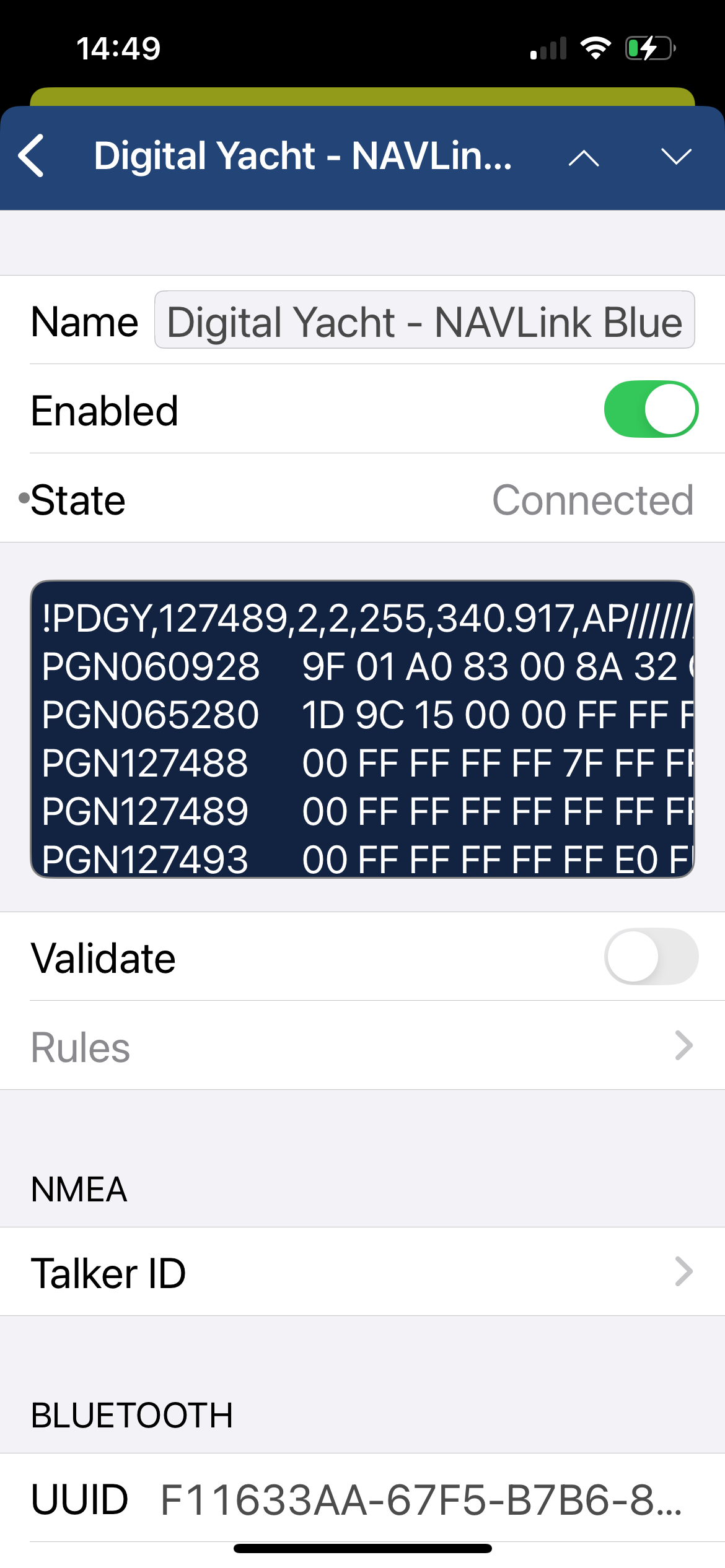
No. The NAVLink Blue operates either in continuous data transmission mode to NMEAremote (or other applications) or in scan mode for nearby Bluetooth sensors such as RuuviTags. It is not possible to use both modes simultaneously.
Yes. Using the SDK provided, developers can create their own Bluetooth integrations and connect new sensors or systems to the NMEA 2000 network.
NavLink Blue Quick Start Guide
308.72 KBA quick 2-page guide designed to help you install, configure, and use Navlink Blue with ease.
NavLink Blue Full Product Manual V2.0
922.87 KBNavLink Blue User Manual V2.0 (after March 2026)
Ruuvi Sensors & NavLink Blue V1_00
786.93 KBRuuvi Sensors & NavLink Blue User Manual V1_00
NavLink Blue Product Manual V1.01
762.22 KBNavLink Blue User Manual V1.01 (before March 2026)
NAVLink Blue - Info for Apps Developers
247.00 KBOur NAVLink Blue device uses Bluetooth Low Energy (BLE) to connect the NMEA 2000 (CAN BUS) to Bluetooth clients in a full duplex mode.